
Search
Whole genome sequencing offers significant potential to improve the diagnosis and treatment of rare diseases by enabling the identification of thousands of rare, potentially pathogenic variants. Existing variant prioritisation tools can be complemented by approaches that incorporate phenotype specificity and provide contextual biological information, such as tissue or cell-type specificity.
RNA-sequencing (RNA-seq) efforts in acute lymphoblastic leukaemia have identified numerous prognostically significant genomic alterations which can guide diagnostic risk stratification and treatment choices when detected early.
To define clinical common data elements (CDEs) and a mandatory minimum data set (MDS) for genomic studies of cerebral palsy (CP). Method: Candidate data elements were collated following a review of the literature and existing CDEs.
The goal of this study was to understand individuals with cerebral palsy (CP) and their family's attitudes and preferences to genomic research, including international data sharing and biobanking.
Mitochondrial energy metabolism plays an important role in the pathophysiology of insulin resistance. Recently, a missense N437S variant was identified in the MRPP3 gene, which encodes a mitochondrial RNA processing enzyme within the RNase P complex, with predicted impact on metabolism. We used CRISPR-Cas9 genome editing to introduce this variant into the mouse Mrpp3 gene and show that the variant causes insulin resistance on a high-fat diet.

Head, Epigenetics
Honorary Research Associate
Trailblazing Aboriginal doctor and health researcher Professor Alex Brown has been made a Fellow of the Australian Academy of Technological Sciences and Engineering (ATSE) in recognition of his leadership in ensuring Indigenous peoples are at the forefront of genomics efforts nationally and internationally.

A national alliance of the brightest minds in genomic science, academia, policy makers, industry and Indigenous leaders will work to break down barriers to ensure Aboriginal and Torres Strait Islander people can benefit from advances in genomic medicine if they choose.
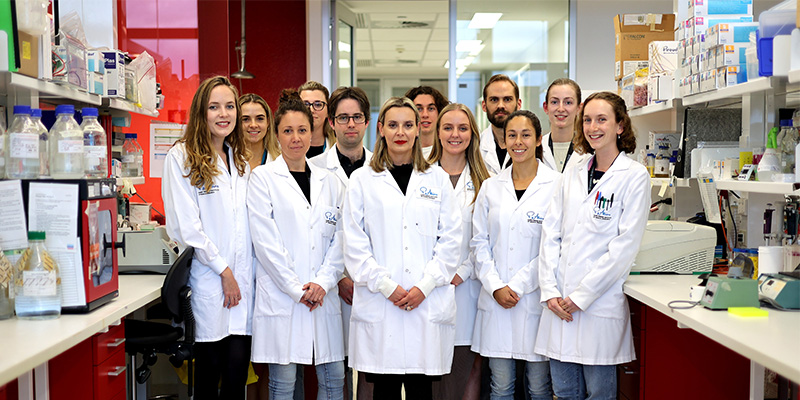
Aleksandra Filipovska has been elected a Fellow of the Australian Academy of Health and Medical Sciences.