
Search
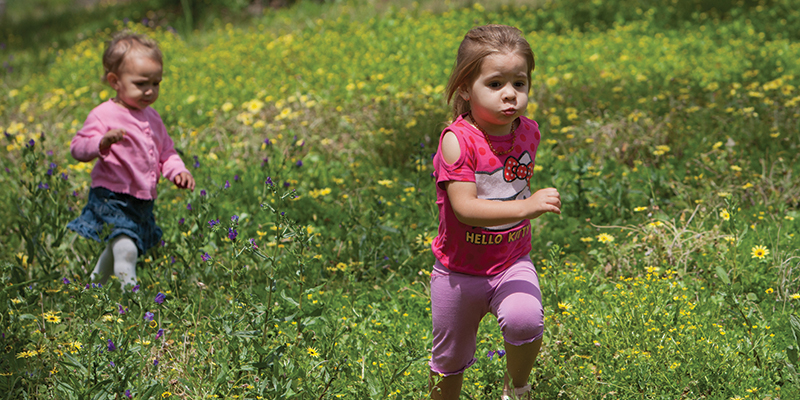
A child can’t thrive if they don’t have a roof over their head.

Despite the risk of having a hypo (low blood glucose levels), Gina said she refused to let T1D stop her from exercising.
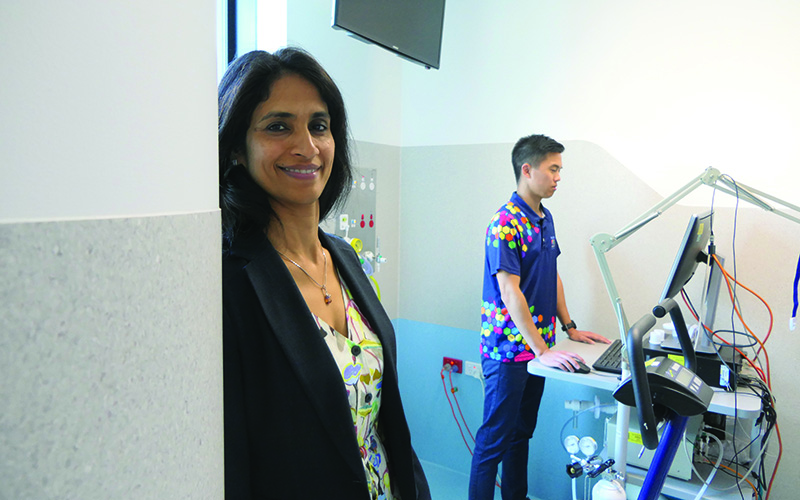
A ground-breaking new app developed by The Kids researchers may soon make exercising safer for young people with type 1 diabetes.
Remote Aboriginal communities in Australia are located on traditional lands holding deep cultural significance and meaning for residents. However, systemic inequity rooted in colonisation has driven persistent housing and health disparities, with inadequate environmental health conditions within homes and communities a prominent example.
Robust evaluation is critical for understanding and enhancing the impact of health promotion initiatives. However, many community-based organisations face challenges in planning and conducting evaluation due to limitations in knowledge, resources, and the applicability of existing evaluation frameworks. The Healthway Evaluation Framework, and its accompanying practical Measurement Toolkit, was designed to support evaluation planning, implementation, and reporting across diverse health promotion programs and settings.
Perioperative anxiety is a common and distressing aspect of anaesthesia for many children, resulting in management challenges at the time of anaesthesia and potential physical and psychological adverse outcomes. We conducted this qualitative phenomenological study to explore the perspectives of children, parents and staff on perioperative anxiety in our institution. Planned recruitment was 20 each of children who had undergone elective anaesthesia, their parents and staff.
The abundant skin commensal, Staphylococcus epidermidis, is the leading cause of late-onset sepsis (LOS) in preterm infants but rarely causes infections in term infants and adults. Staphylococcal virulence mechanisms and the role of the preterm immune responses in driving these life-threatening infections remain poorly understood.
The risk of congenital anomalies following first-trimester medication exposure is an important indicator of medication safety during pregnancy. Retrospective cohort studies using routinely collected data are commonly used to assess this risk, yet methodological inconsistencies-such as how cohorts, exposures, timings and outcomes are defined-can compromise reproducibility and validity. This scoping review examined the methodologies used in retrospective cohort studies assessing the association between first-trimester prenatal medication exposure and congenital anomalies.
X-linked hypophosphatemia (XLH) is a rare, X-linked dominant condition with a high burden of both physical and psychosocial disease. This study aimed to describe the experience and burden of disease for children and adults living with XLH in Australia by inviting affected individuals and their carers to complete an online questionnaire. Of the 46 responses, half were completed by a person with XLH, and half by carers. Thirty percent were male, 33% were aged less than 18 yr.
Autosomal recessive hypophosphatemic rickets type 2 (ARHR2) and generalized arterial calcification of infancy (GACI) occur secondary to biallelic ectonucleotide pyrophosphate/phosphodiesterase 1 (ENPP1) loss-of-function pathogenic variants. GACI is a life-threatening condition, often presenting in the neonatal period with heart failure and hypertension, caused by calcification of the media in large- and medium-sized arteries.