
Search
Most COVID-19 vaccines are designed to elicit immune responses, ideally neutralizing antibodies (NAbs), against the SARS-CoV-2 spike protein. Several vaccines, including mRNA, adenoviral-vectored, protein subunit and whole-cell inactivated virus vaccines, have now reported efficacy in phase III trials and have received emergency approval in many countries.
Pediatric anesthesiology has been greatly impacted by COVID-19 in the delivery of care to patients and to the individual providers. With this study, we sought to survey pediatric centers and highlight the variations in care related to perioperative medicine during the COVID-19 pandemic, including the availability of protective equipment, the practice of pediatric anesthesia, and economic impact.
This article identifies and examines a range of policy reform opportunities in Australia arising from COVID-19. The authors demonstrate how COVID-19 presents unique opportunities for rethinking and redesigning long-standing rules and regulations covering how people live and work in Australia.
Ahead of the implementation of a COVID-19 vaccination programme, the interdisciplinary Coronavax research team developed a multicomponent mixed methods project to support successful roll-out of the COVID-19 vaccine in Western Australia. This project seeks to analyse community attitudes about COVID-19 vaccination, vaccine access and information needs. We also study how government incorporates research findings into the vaccination programme.
The role of children in the spread of severe acute respiratory syndrome coronavirus 2 (SARS-CoV-2) remains highly controversial. To address this issue, we performed a meta-analysis of the published literature on household SARS-CoV-2 transmission clusters (n = 213 from 12 countries). Only 8 (3.8%) transmission clusters were identified as having a pediatric index case.
In 2020, school and early childhood educational centre (ECEC) closures affected over 1.5 billion school-aged children globally as part of the COVID-19 pandemic response. Attendance at school and access to ECEC is critical to a child's learning, well-being and health. School closures increase inequities by disproportionately affecting vulnerable children. Here, we summarise the role of children and adolescents in Severe Acute Respiratory Syndrome Coronavirus 2 (SARS-CoV-2) transmission and that of schools and ECECs in community transmission and describe the Australian experience.
Christopher Blyth MBBS (Hons) DCH FRACP FRCPA PhD Centre Head, Wesfarmers Centre of Vaccines and Infectious Diseases; Co-Head, Infectious Diseases
This article examines whether connection to digital technologies helps connect young Indigenous people in Australia to culture, community and country to support good mental health and well-being and protect against indirect and potentially long-term effects of COVID-19.

MEDIA ENQUIRIES Discover. Prevent. Cure. Mailing list Media contacts About The Kids Be Inspired Please direct general enquiries to our reception on (
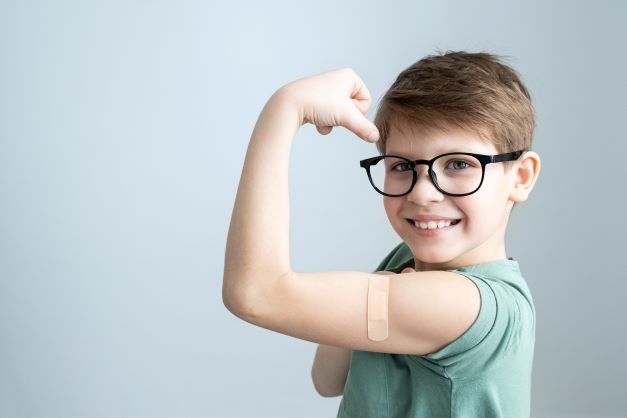
A first-of-its-kind national study looking at the optimal COVID-19 vaccination strategies for children and adolescents is set to begin at Perth’s The Kids Research Institute Australia thanks to a $3.8 million funding injection from the Australian Government’s Medical Research Future Fund (MRFF).