Search
Research
Brain-behavior links in autism spectrum disorder across the lifespanAndrew Videos Whitehouse Watch and listen to Andrew PhD Deputy Director (Research); Angela Wright Bennett Professor of Autism Research at The Kids
Research
Co-design of a neurodevelopment assessment scale: A study protocolNeurodevelopmental disorders are a heterogeneous group of conditions with overlapping symptomatology and fluctuating developmental trajectories that transcend current diagnostic categorisation. There is a need for validated screening instruments which dimensionally assess symptomatology from a holistic, transdiagnostic perspective.
Research
Genetic association study of childhood aggression across raters, instruments, and ageChildhood aggressive behavior (AGG) has a substantial heritability of around 50%. Here we present a genome-wide association meta-analysis (GWAMA) of childhood AGG, in which all phenotype measures across childhood ages from multiple assessors were included. We analyzed phenotype assessments for a total of 328 935 observations from 87 485 children aged between 1.5 and 18 years, while accounting for sample overlap.
Research
Co-occurring intellectual disability and autism: Associations with stress, coping, time use, and quality of life in caregiversHaving a child on the autism spectrum (AS) is known to impact caregiver quality of life (QoL), time use, and stress. A co-occurring diagnosis of intellectual disability (ID) is common among children on the autism spectrum, with ID itself impacting caregiver outcomes. This study sought to understand how co-occurring ID in children on the autism spectrum may influence caregiver-related outcomes. Secondary analysis of survey data from caregivers of 278 children on the autism spectrum with (n = 62) and without (n = 216) co-occurring ID was conducted, exploring impacts on caregiver QoL, stress, coping, and time-use.
Research
Devising a Missing Data Rule for a Quality of Life Questionnaire - A Simulation StudyThe aim of this study was to devise an evidence-based missing data rule for the Quality of Life Inventory-Disability (QI-Disability) questionnaire specifying how many missing items are permissible for domain and total scores to be calculated using simple imputation.
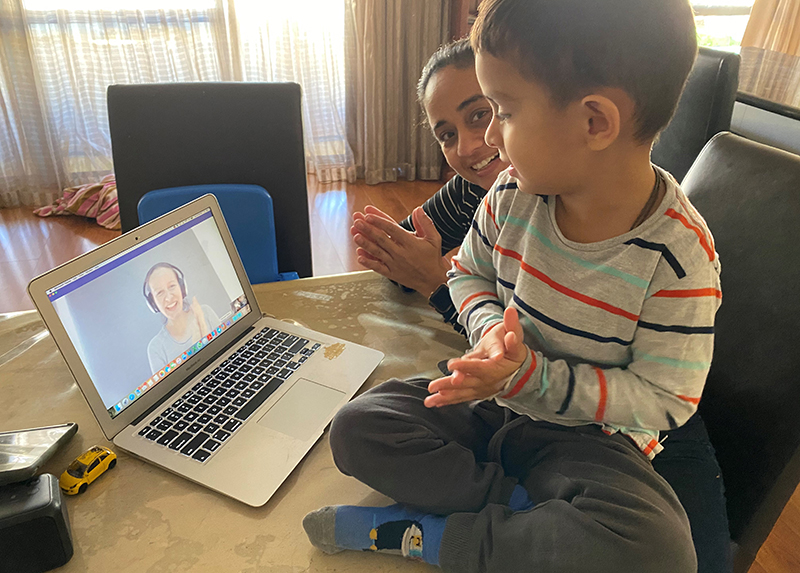
Discover how this family is benefitting from CliniKids' evidence-based therapies.
Research
Sex-Specific Effects of Birth Weight on Longitudinal Behavioral Outcomes: A Mendelian Randomization Approach Using Polygenic ScoresIt is unclear whether sex differences in behavior arising from birth weight (BW) are genuine because of the cross-sectional nature and potential confounding in previous studies. We aimed to test whether sex differences associated with BW phenotype were reproducible using a Mendelian randomization approach, i.e., association between polygenic score (PGS) for BW and behavior outcomes across childhood and adolescence.
Research
Reliability, Validity and Acceptability of the PEDI-CAT with ASD Scales for Australian Children and Youth on the Autism SpectrumThe PEDI-CAT (ASD) is used to assess functioning of children and youth on the autism spectrum; however, current psychometric evidence is limited. This study aimed to explore the reliability, validity and acceptability of the PEDI-CAT (ASD) using a large Australian sample.
Research
Predictors of Change in Wellbeing and Mental Health of Parents of Autistic Pre-SchoolersParenting is a rewarding experience but is not without its challenges. Parents of Autistic children face additional challenges, and as a result can experience lower levels of wellbeing and more mental health problems (i.e., depression, anxiety, stress). Previous studies have identified concurrent correlates of wellbeing and mental health.
Research
Development of a Model of Care resource for FASD in the justice systemThis article describes the development of a Model of Care resource to support youth involved with the justice system where a neurodevelopmental disability such as Fetal Alcohol Spectrum Disorder is suspected. Service staff within the Youth Justice sector were engaged in an iterative process of resource development over a 9-month period.