
Search
This research project was part of the broader Ngulluk Koolunga Ngulluk Koort (Our Children, Our Heart) five-year (2016 to 2020) project.
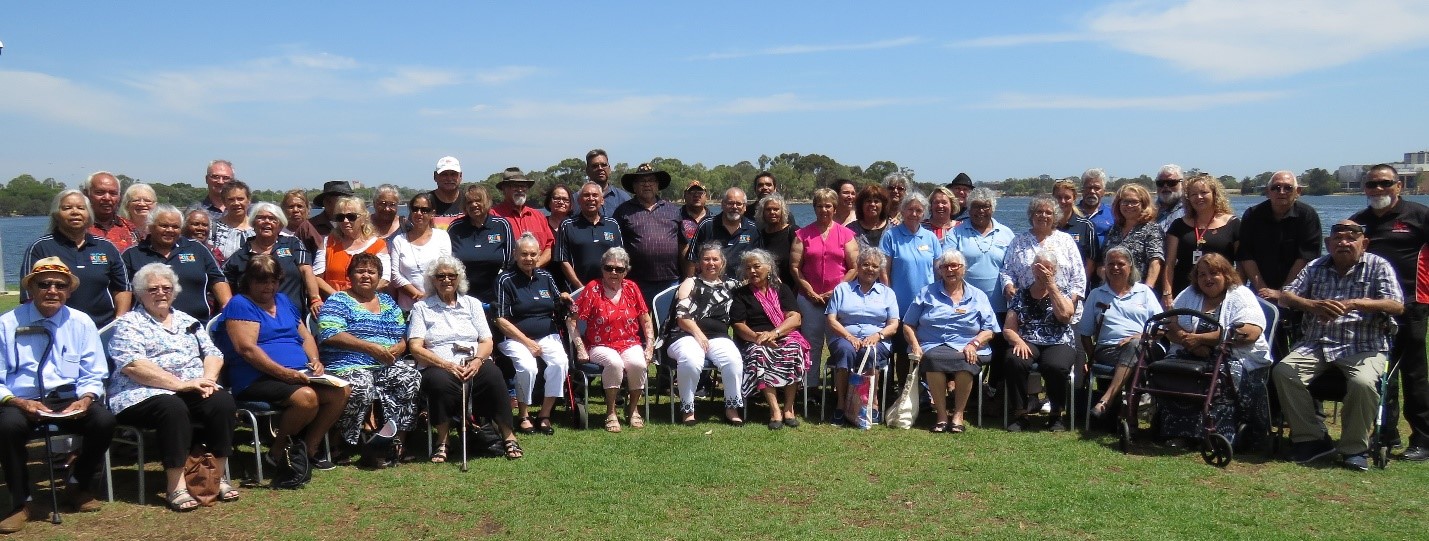
The third Big Elders meeting/gathering was held on the 26th of February 2019 at Burswood on Swan.
In Australia, Aboriginal children experience disproportionate rates of type 2 diabetes (T2D) compared with non-Aboriginal children. The aim of this qualitative study was to explore the experiences of Aboriginal adolescents with T2D and their family members to better understand the influences of T2D on self-management, with findings used to inform an enhanced service model of care.
Premature onset of type 2 diabetes and excess mortality are critical issues internationally, particularly in Indigenous populations. There is an urgent need for developmentally appropriate and culturally safe models of care. We describe the methods for the codesign, implementation and evaluation of enhanced models of care with Aboriginal and Torres Strait Islander youth living with type 2 diabetes across Northern Australia.
To generate contemporary age-specific mortality rates for Indigenous and non-Indigenous Australians aged <65 years who died from rheumatic heart disease between 2013 and 2017, and to ascertain the underlying causes of death of a prevalent RHD cohort aged <65 years who died during the same period.
Despite significant improvements in pediatric cancer survival outcomes, there remain glaring disparities in under-represented racial and ethnic groups that warrant mitigation by the scientific and clinical community. To address and work towards eliminating such disparities, the Pacific Pediatric Neuro-Oncology Consortium (PNOC) and Children's Brain Tumor Network (CBTN) established a Diversity, Equity, and Inclusion (DEI) working group in 2020. The DEI working group is dedicated to improving access to care for all pediatric patients with central nervous system (CNS) tumors, broadening diversity within the research community, and providing sustainable data-driven solutions.
While there are many skin infections, reducing the burden of scabies and impetigo for remote living Aboriginal people, particularly children remains challenging. Aboriginal children living in remote communities have experienced the highest reported rate of impetigo in the world and are 15 times more likely to be admitted to hospital with a skin infection compared to non-Aboriginal children.
Streptococcus pyogenes, or group A Streptococcus (GAS), infections contribute to a high burden of disease in Aboriginal Australians, causing skin infections and immune sequelae such as rheumatic heart disease. Controlling skin infections in these populations has proven difficult, with transmission dynamics being poorly understood. We aimed to identify the relative contributions of impetigo and asymptomatic throat carriage to GAS transmission.
It is likely that young people who are both Aboriginal and Torres Strait Islander and LGBTQA+ would be at increased risk for poor mental health outcomes due to the layered impacts of discrimination they experience; however, there is very little empirical evidence focused on the mental health and wellbeing of Aboriginal and Torres Strait Islander LGBTQA+ young people. The current study represents a qualitative exploration of wellbeing among Aboriginal LGBTQA+ young people.
Between 1964 and 1996, the 10-year survival of patients having valve replacement surgery for rheumatic heart disease (RHD) in the Northern Territory, Australia, was 68%. As medical care has evolved since then, this study aimed to determine whether there has been a corresponding improvement in survival.