Skip to content
The Kids Research Institute Australia logo
Donate

No results yet

Search

News & Events

Federal politicians urged to adopt transport priorities that keep kids happy, healthy and safe

The Kids Research Institute Australia has backed a series of transport priorities to keep children safer on the roads, boost physical activity levels, and save the economy billions of dollars.

News & Events

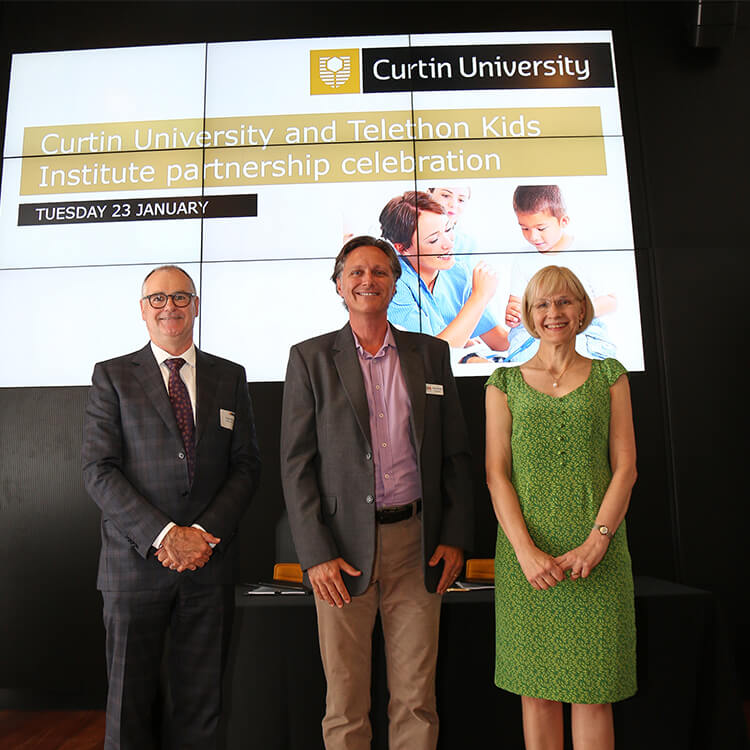
New era for child health research with The Kids Research Institute Australia and Curtin partnership signed

The Kids Research Institute Australia and Curtin University will work together as part of a new agreement focused on enhancing children’s health and medical research in WA.
Research

The Truth Of Our Stories: A mixed method evaluation of Elder and community-led cultural training for out-of-home care agency workers and non-Indigenous foster carers in Australia

Globally, Indigenous peoples have incurred significant harm due to colonisation of their lands. Dispossession of culture, language, family and land, and the historical, systematic removal of children in Australia (the ‘Stolen Generation’), has resulted in evident ongoing negative outcomes in the contemporary lives of Aboriginal and Torres Strait Islander people.

Research

Neighbourhood walkability and body mass index in children: Evidence from the Millennium Cohort Study in Wales

Overweight and obesity in children continues to increase. Yet, the role of active transport, namely walking, in mitigating these trends remains unclear. This study examined the cross-sectional association between walkability and children's Body Mass Index (BMI) and how this varies by socio-economic and lifestyle characteristics.

Research

Caudal block, high flow oxygen insufflation and dexmedetomidine sedation for inguinal hernia surgery in infants—A prospective evaluation of an alternative anesthesia technique

Inguinal hernia repair is the most common operation in infants, with well recognized anesthetic and perioperative risks. The aim was to investigate if the combination of caudal block, high-flow nasal oxygen insufflation and intravenous dexmedetomidine sedation is suitable for infants undergoing inguinal hernia surgery.

Research

Virome assembly reveals draft genomes of native Pseudomonas phages isolated from a paediatric bronchoalveolar lavage sample

We present lung virome data recovered through shotgun metagenomics in bronchoalveolar lavage fluid from an infant with cystic fibrosis, who tested positive for Stenotrophomonas maltophilia infection. Using a bioinformatic pipeline for virus characterization in shotgun metagenomic data, we identified five viral contigs representing Pseudomonas phages classified as Caudoviricetes.

Research

Children's Anxiety in the Perioperative Environment: A Qualitative Exploration With Children, Parents and Staff at a Tertiary Paediatric Hospital

Perioperative anxiety is a common and distressing aspect of anaesthesia for many children, resulting in management challenges at the time of anaesthesia and potential physical and psychological adverse outcomes. We conducted this qualitative phenomenological study to explore the perspectives of children, parents and staff on perioperative anxiety in our institution. Planned recruitment was 20 each of children who had undergone elective anaesthesia, their parents and staff. 

Research

Evaluating the scale-up of the Play Active programme for children’s physical activity in early childhood education and care services: a national type III hybrid effectiveness-implementation

Physical activity is crucial for young children's health and development. Many young children do not meet the recommended 3 hours of daily physical activity, including 60 min of energetic play. Early childhood education and care (ECEC/childcare) is a key setting to intervene to improve children's physical activity. The Play Active programme is a scalable evidence-informed ECEC-specific physical activity policy intervention with implementation support strategies to improve educators' physical activity-related practices.

Research

Assessing the Impact of Pneumococcal Conjugate Vaccine Immunization Schedule Change From 3+0 to 2+1 in Australian Children: A Retrospective Observational Study

In mid-2018, the Australian childhood 13-valent pneumococcal conjugate vaccine schedule changed from 3+0 to 2+1, moving the third dose to 12 months of age, to address increasing breakthrough cases of invasive pneumococcal disease (IPD), predominantly in children aged >12 months. This study assessed the impact of this change using national IPD surveillance data.

Research

Understanding wellbeing from the perspective of youth with chronic conditions: A group concept mapping approach

Promoting wellbeing for youth is a global health priority and young people with chronic conditions demonstrate disproportionately low wellbeing compared to their peers. However, wellbeing is variably defined, and little is understood as to what wellbeing means for this population. The aim of this study was to develop a conceptualisation of wellbeing that is rooted in the perspectives of young people with chronic conditions.