Skip to content
The Kids Research Institute Australia logo
Donate

Search

The Human Phenotype Ontology in 2021

The Human Phenotype Ontology was launched in 2008 to provide a comprehensive logical standard to describe and computationally analyze phenotypic abnormalities found in human disease. The HPO is now a worldwide standard for phenotype exchange. The HPO has grown steadily since its inception due to considerable contributions from clinical experts and researchers from a diverse range of disciplines. Here, we present recent major extensions of the HPO for neurology, nephrology, immunology, pulmonology, newborn screening, and other areas.

Addressing hard‐to‐reach populations for achieving malaria elimination in the Asia Pacific Malaria Elimination Network countries

Member countries of the Asia Pacific Malaria Elimination Network are pursuing the regional goal of malaria elimination by 2030. The countries are in different phases of malaria elimination, but most have demonstrated success in shrinking the malaria map in the region. However, continued transmission in hard‐to‐reach populations, including border and forest malaria, remains an important challenge. In this article, we review strategies for improving intervention coverage in hard‐to‐reach populations. Currently available preventive measures, including long‐lasting insecticidal nets and long‐lasting insecticidal hammocks, and prompt diagnosis and treatment need to be expanded to hard‐to‐reach populations. This can be done through mobile malaria clinics, village volunteer malaria workers and screening posts. Malaria surveillance in the hard‐to‐reach areas can be enhanced through tools such as spatial decision support systems

Dysfunctional gut microbiome networks in childhood ige‐mediated food allergy

The development of food allergy has been reported to be related with the changes in the gut microbiome, however the specific microbe associated with the pathogenesis of food allergy remains elusive. This study aimed to comprehensively characterize the gut microbiome and identify individual or group gut microbes relating to food-allergy using 16S rRNA gene sequencing with network analysis.

Immunotherapy of allergic diseases by bacterial products

Allergic diseases are characterized by excessive immunoglobulin E (IgE) production, mast cell degranulation, tissue eosinophilia and mucus hypersecretion

Immunodominant T-cell epitopes in the VP1 capsid protein of rhinovirus species A and C

Our results indicate a dissociation between the antibody and T-cell responses to rhinoviruses

Clinical Management of Staphylococcus aureus Bacteremia in Neonates, Children, and Adolescents

Staphylococcus aureus is a common cause of community and health care-associated bacteremia, with authors of recent studies estimating the incidence of S aureus bacteremia (SAB) in high-income countries between 8 and 26 per 100 000 children per year. Despite this, <300 children worldwide have ever been randomly assigned into clinical trials to assess the efficacy of treatment of SAB.

New research to tackle rising food allergies in kids

new research at The Kids Research Institute Australia will look at the diets of mums to see if regularly eating more eggs or peanuts during pregnancy and while breastfeeding

Chinese immigrants in Australia at higher risk of allergies, research shows

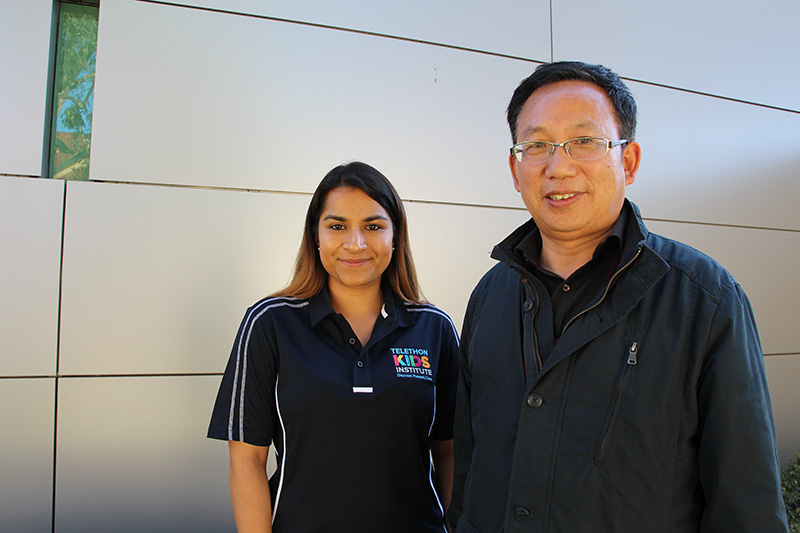
Chinese immigrants who live in a Western environment like Australia have an increased risk of allergies, hay fever and asthma, new research led by Curtin University and The Kids Research Institute Australia has found.