
Search
Despite high levels of global concern, little is known about the epidemiology of Clostridioides (Clostridium) difficile infection (CDI) in Cambodia. This study aimed to identify the prevalence and risk factors for CDI, and molecular types of C. difficile in hospitalized adults at Calmette Hospital, Phnom Penh, Cambodia.
Country-level estimates can mask local geographic variations in progress toward achieving World Health Organization's End TB targets. This study aimed to identify spatial variations in progress toward achieving the TB incidence reduction target at a district level in Ethiopia.
Malaria remains a leading cause of illness and death globally, with countries in sub-Saharan Africa bearing a disproportionate burden. Global high-resolution maps of malaria prevalence, incidence, and mortality are crucial for tracking spatially heterogeneous progress against the disease and to inform strategic malaria control efforts. We present the latest such maps, the first since 2019, which cover the years 2000–22. The maps are accompanied by administrative-level summaries and include estimated COVID-19 pandemic-related impacts on malaria burden.
Interferon γ release assays (IGRAs) are widely used for diagnosis of latent tuberculosis infection. However, with repeated testing, IGRA transformation (conversion or reversion) may be detected and is challenging to interpret. We reviewed the frequency of and risk factors for IGRA transformation.
Under-five mortality declined in the last two decades in Ethiopia, but sub-national and local progress remains unclear. This study aimed to investigate the spatiotemporal distributions and ecological level factors of under-five mortality in Ethiopia. Data on under-five mortality were obtained from five different Ethiopian Demographic and Health Surveys conducted in 2000, 2005, 2011, 2016, and 2019. Environmental and healthcare access data were obtained from different publicly available sources.
The management of multidrug-resistant tuberculosis (MDR-TB) during pregnancy is challenging, yet no systematic synthesis of evidence has accurately measured treatment outcomes.
By mapping land use under projections of socio-economic change, ecological changes can be predicted to inform conservation decision-making. We present a land use model that enables the fine-scale mapping of land use change under future scenarios.
In this report, we present a protocol for a geospatial meta-analysis to investigate the spatial patterns of TB prevalence in Ethiopia
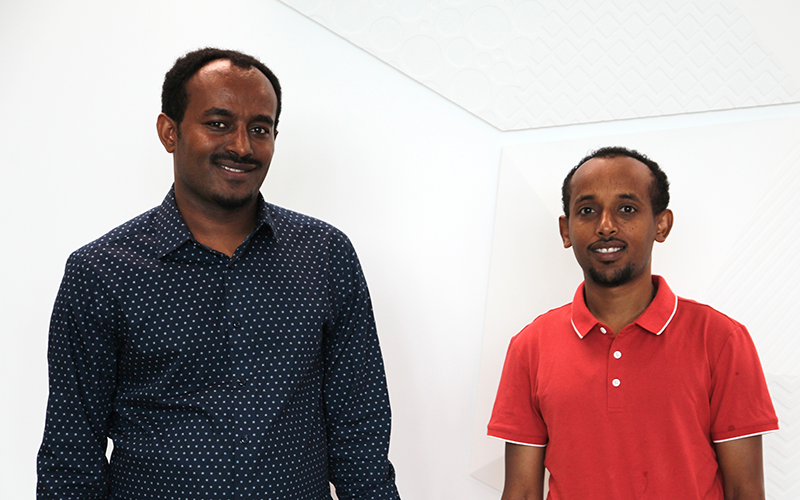
New research highlights the long-term physical health problems faced by people who survive drug-resistant tuberculosis (TB) .
Kefyalew Alene BSc, MPH, PhD Head, Geospatial and Tuberculosis 0404705064 Kefyalew.alene@thekids.org.au Honorary Research Fellow Dr Kefyalew Alene