
Search
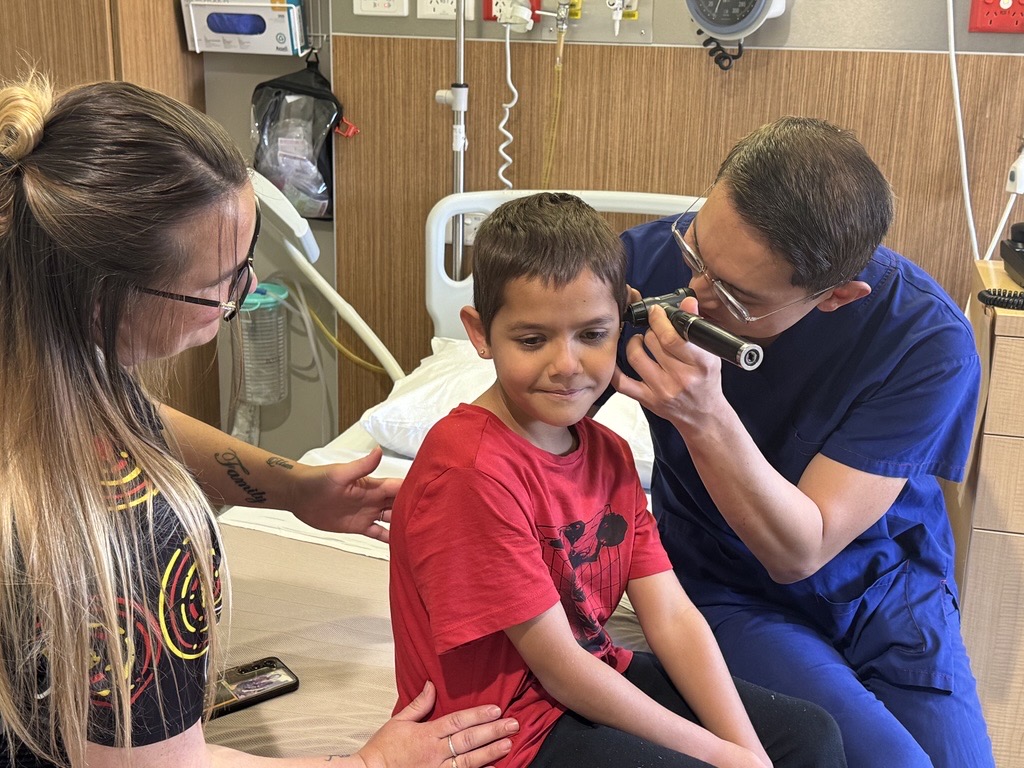
Painful ear infections and muffled sounds are a thing of the past for 100 Aboriginal children who have received free grommet surgery thanks to the Djaalinj Waakinj (listening and hearing) Ear Health program.
COVID-19 related non-pharmaceutical interventions (NPIs) disrupted global healthcare utilisation, with notable declines in infection related paediatric hospitalisations. We aimed to identify non-infectious paediatric conditions for which the incidence of hospital admissions increased during the introduction and alleviation of NPIs in 2020.
Influenza and COVID-19 vaccine uptake among pregnant women is sub-optimal. We assessed the effectiveness of a multi-component behavioural nudge intervention to improve COVID-19 and influenza vaccine uptake among pregnant women.
Congenital cytomegalovirus (cCMV) is an important cause of long-term childhood disability. In Australia, the identification and treatment practices and the long-term clinical and neurodevelopmental outcomes of children with cCMV are unknown.
Gram-negative bacterial infections remain a major cause of morbidity and mortality in children and neonates globally, compounded by the rise of antimicrobial resistance. Barriers to paediatric antibiotic licencing lead to reduced availability of potentially effective agents for treatment. For children and neonates in the Oceania region, specific challenges remain including a paucity of surveillance data on local rates of antimicrobial resistance, and lack of availability of newer, more costly agents.
Describe the physiotherapy interventions provided to children with cerebral palsy at risk of respiratory illness and determine criteria for safe in-home treatment.
Studies of traditional Indigenous compared to 'Western' gut microbiomes are underrepresented, and lacking in young children, limiting knowledge of early-life microbiomes in different cultural contexts. Here we analyze the gut metagenomes of 50 Indigenous Australian infants (median age <one year) living remotely with variable access to Western foods, compared to age- and sex-matched non-Indigenous infants living in urban Australia.
Antimicrobial resistance (AMR) is a global healthcare emergency, directly causing 1.3 million deaths per year and predicted to increase dramatically over the coming decades. Understanding the molecular mechanisms underpinning antibiotic resistance is central to approaches for AMR surveillance and diagnosis in a clinical laboratory.
Hepatitis B (HBV) prevalence is very high in pregnant women in the Dolpa district of Nepal, a region characterised by a remote geographic landscape and low vaccination coverage. Using mathematical modelling, we evaluated the impact of third-trimester tenofovir disoproxil fumarate (TDF) prophylaxis on HBV burden and estimated the time required to achieve HBV elimination in Dolpa.
Non-coercive 'nudge' interventions have shown the potential to promote health behaviours. This study aimed to evaluate the impact of nudge interventions on COVID-19/influenza vaccine uptake among children with medically at-risk conditions.