Skip to content
The Kids Research Institute Australia logo
Donate

No results yet

Search

Research

Development of the Consumer Involvement & Engagement Toolkit: a digital resource to build capacity for undertaking patient-centred clinical trials in Australia

This paper describes the novel approach to developing a toolkit to support meaningful consumer involvement in clinical trials in Australia to help guide others in considering the development of similar resources.The toolkit aims to support greater consumer involvement in shaping how clinical research is prioritised, designed and conducted. Type of program or service: A working group of researchers, research organisations and consumers was established to co-develop the Consumer Involvement and Engagement Toolkit (the 'Toolkit'), a digital resource to guide researchers and organisations regarding consumer involvement in clinical trials.

Research

Identifying the asthma research priorities of people with asthma, their carers and other stakeholders

People living with asthma, their carers, clinicians and policymakers are the end-users of research and need research that address their individual healthcare needs. We aimed to understand the research priorities of end-users of asthma research.

Research

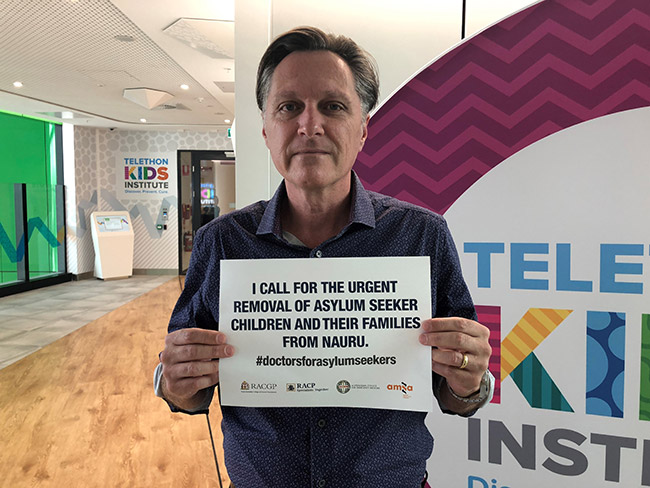
Offshore detention: cross-sectional analysis of the health of children and young people seeking asylum in Australia

To describe the health and well-being of children and young people (CYP) seeking asylum subjected to Australia's immigration policy of indefinite mandatory detention on Nauru.

Research

“It's a big trauma for the family”: A qualitative insight into the psychological trauma of paediatric burns from the perspective of mothers

Despite the medical and surgical improvements of paediatric burn injuries, burn injuries can be a painful and traumatic experience for the child and their family. It is therefore important to explore the experiences of caregivers who support their child throughout the burn journey. Thus, the purpose of this study was to explore the traumatic nature of paediatric burns on the family from a caregiver's perspective.

Research

"I just get scared it's going to happen again": a qualitative study of the psychosocial impact of pediatric burns from the child's perspective

Advances in medicine have improved the chances of survival following burn injuries, however, psychosocial outcomes have not seen the same improvement, and burn injuries can be distressing for both the child or young person, negatively affecting their wellbeing. Pediatric burn patients are at a higher risk of developing psychopathology compared to the general population.

Research

PKC activation promotes maturation of cord blood T cells towards a Th1 IFN-γ propensity

A significant number of babies present transiently with low protein kinase C zeta (PKCζ) levels in cord blood T cells, associated with reduced ability to transition from a neonatal Th2 to a mature Th1 cytokine bias, leading to a higher risk of developing allergic sensitisation, compared to neonates whose T cells have 'normal' PKCζ levels. However, the importance of PKCζ signalling in regulating their differentiation from a Th2 to a Th1 cytokine phenotype propensity remains undefined.

Research

Neurodevelopmental outcomes in children after prenatal marijuana exposure

The effect of prenatal marijuana exposure on child neurodevelopment remains poorly understood. Prior studies have demonstrated inconsistent results.

Research

Patient and Process Outcomes among Pediatric Patients Undergoing Appendectomy during the COVID-19 Pandemic: An International Retrospective Cohort Study

COVID-19 forced healthcare systems to make unprecedented changes in clinical care processes. The authors hypothesized that the COVID-19 pandemic adversely impacted timely access to care, perioperative processes, and clinical outcomes for pediatric patients undergoing primary appendectomy.

Research

Substrate-dependent metabolomic signatures of myeloperoxidase activity in airway epithelial cells: Implications for early cystic fibrosis lung disease

Myeloperoxidase is released by neutrophils in inflamed tissues. MPO oxidizes chloride, bromide, and thiocyanate to produce hypochlorous acid, hypobromous acid, and hypothiocyanous acid, respectively. These oxidants are toxic to pathogens, but may also react with host cells to elicit biological activity and potential toxicity. In cystic fibrosis and related diseases, increased neutrophil inflammation leads to increased airway MPO and airway epithelial cell exposure to its oxidants.

Research

Australian and New Zealand consensus guideline for paediatric newly diagnosed immune thrombocytopaenia endorsed by Australian New Zealand Children's Haematology and Oncology Group

In children, the majority of cases are self-limiting and thus many paediatric patients can be managed conservatively with minimal complications. This varies considerably compared to adult newly diagnosed immune thrombocytopaenia (NDITP) where, in most cases, thrombocytopaenia persists with higher risk of moderate to severe bleeding complications.