
Search
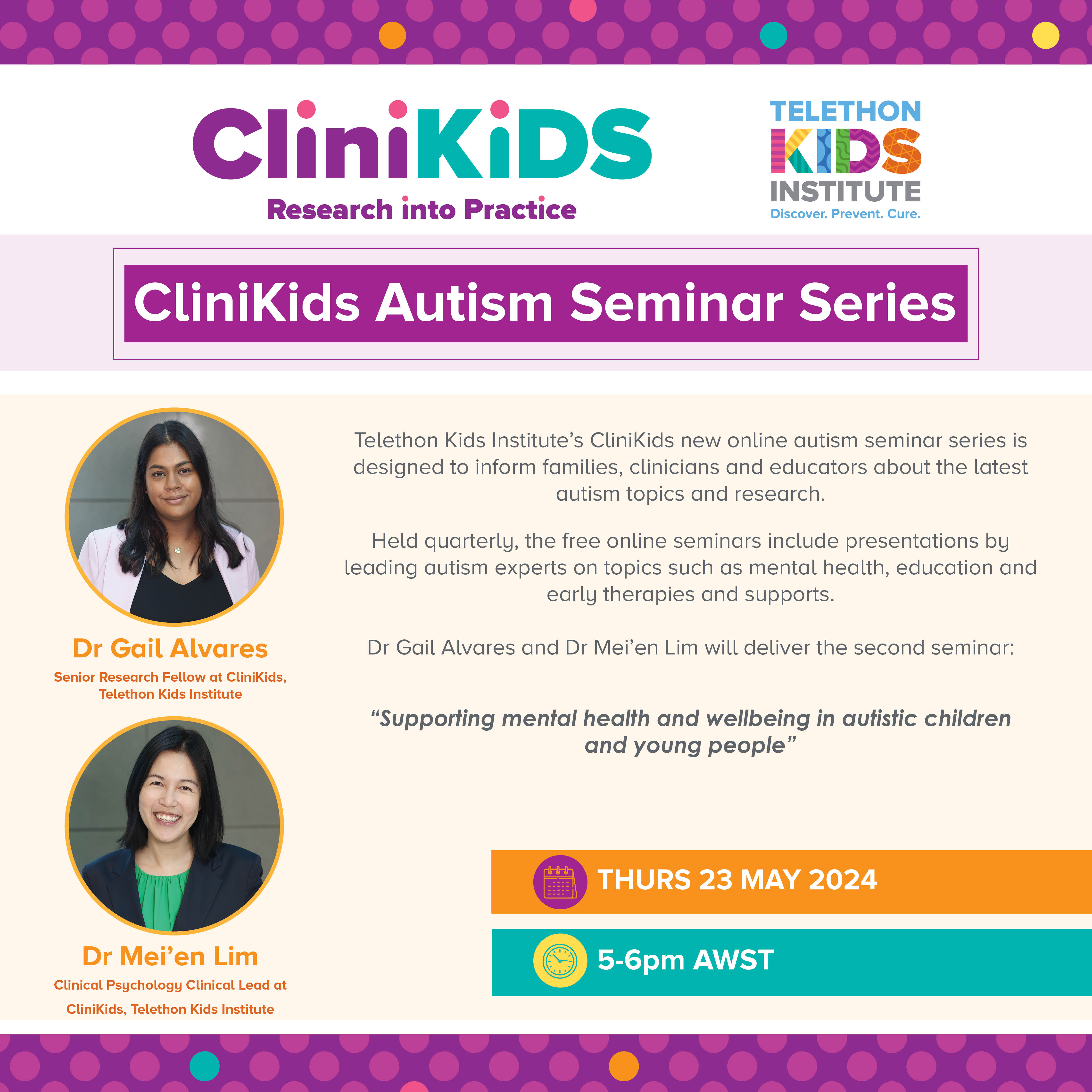
Here you will find follow up information from our autism seminar on mental health and autism.
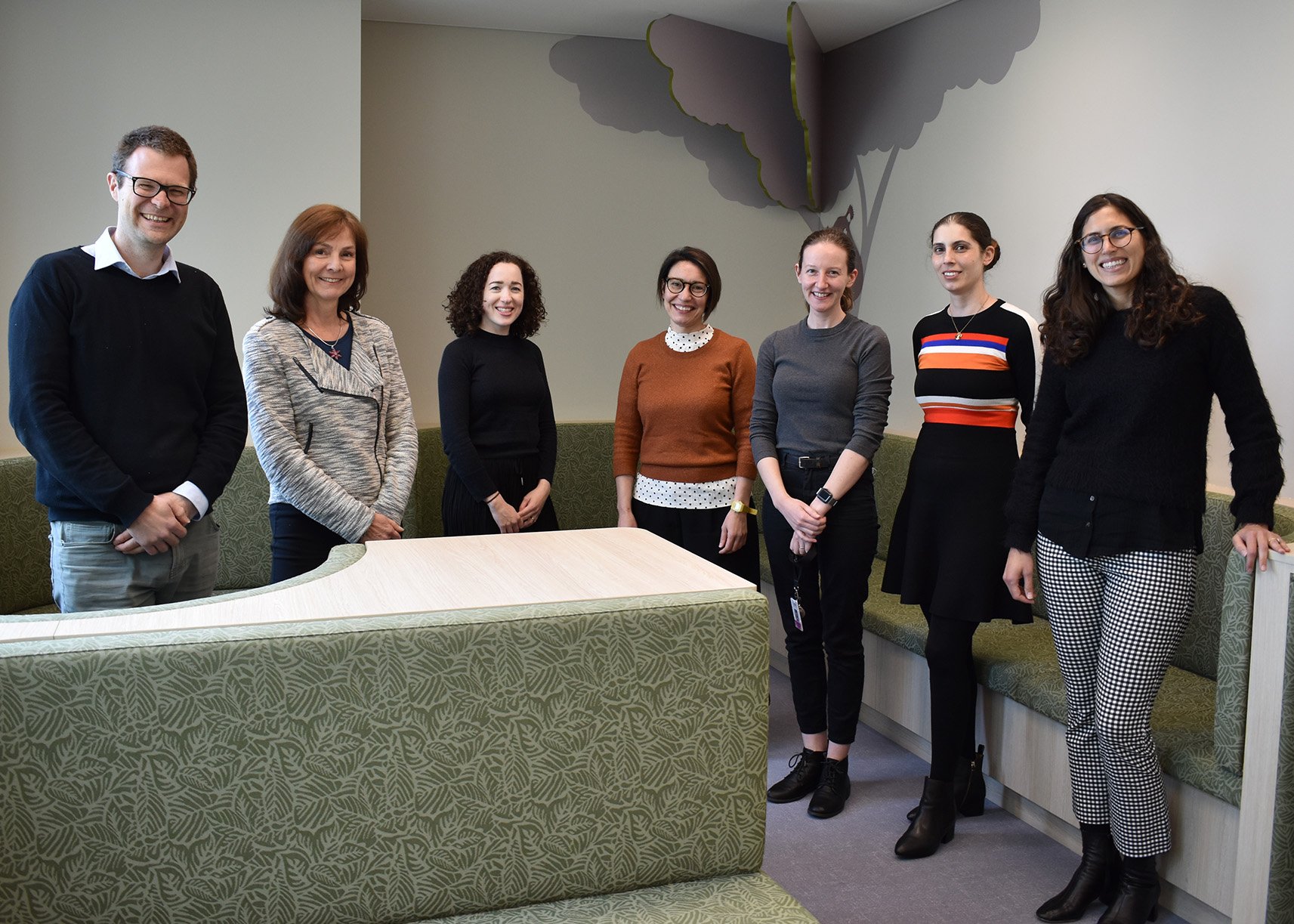
For Speech Pathology Week, we asked our speech pathologists to share their favourite resource/s and how they like to use it.
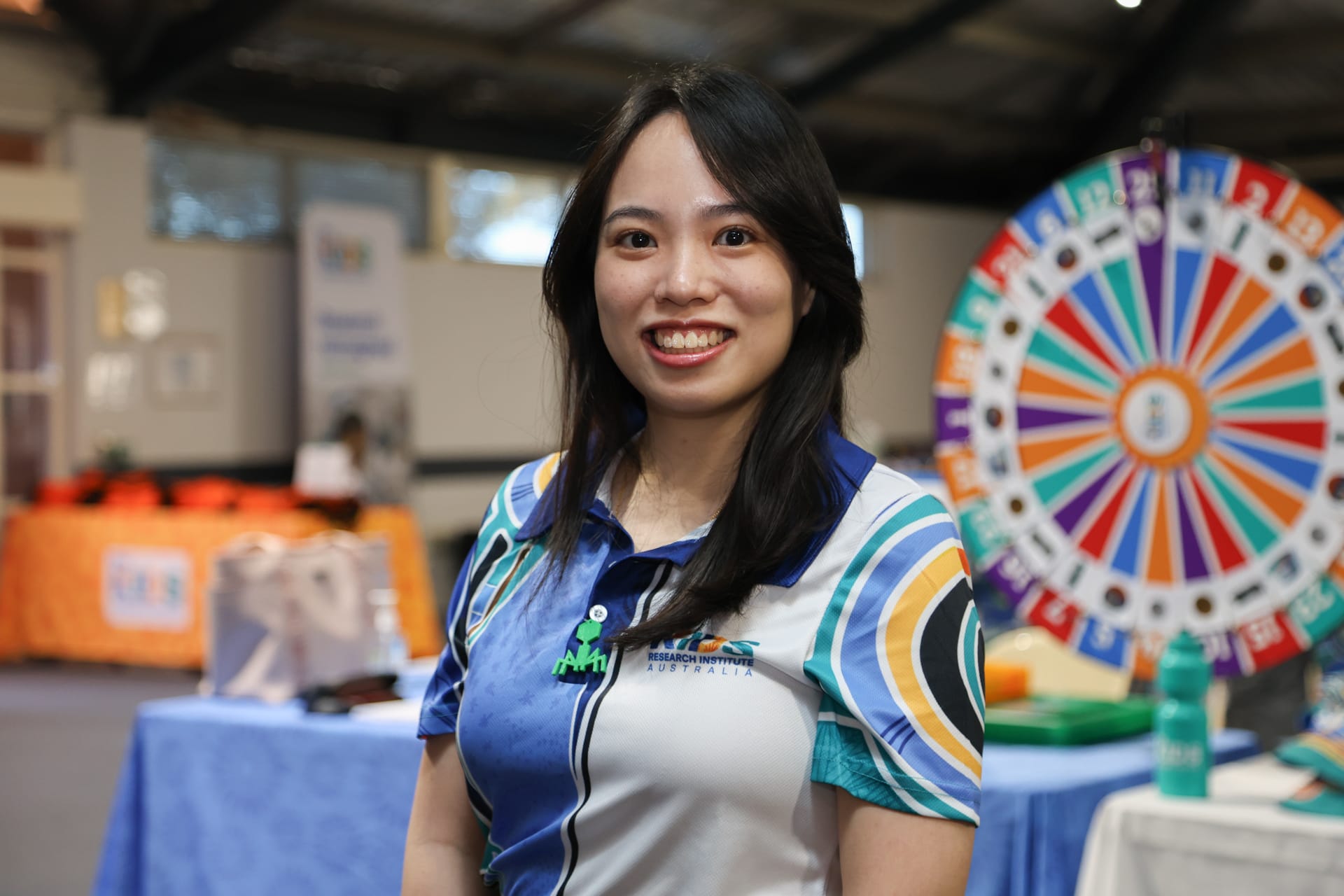
The Kids Research Institute Australia’s annual Prospective Student Evening is an opportunity for students considering Honours, Masters, MDs, or PhDs to learn about what it would mean to work on a project based at the Institute.
This study provides new knowledge on ARF characteristics and management and highlights international variation in diagnostic and management practice.
Remote-living Aboriginal children in Australia contend with higher rates of skin infections than non-Indigenous children. This work was embedded within a stepped-wedge, cluster randomised controlled trial aiming to halve the rate of skin infections in remote Kimberley communities. It outlines and reflects upon the co-development of a health promotion resource in partnership with the East Kimberley community of Warmun, whilst understanding community perceptions of its impact.
Pediculosis capitis is a worldwide prevalent public health issue, mostly involving children. Resistance has been increasingly identified with conventional treatments such as permethrin or malathion. We aimed to evaluate the therapeutic potential of plant-based therapies for pediculosis capitis. PubMed, MEDLINE, Embase, EmCare, Web of Science, Cochrane, and ScienceDirect were searched for studies.
Measures of autistic traits are only useful – for pre-diagnostic screening, exploring individual differences, and gaining personal insight – if they efficiently and accurately assess autism as currently conceptualised while maintaining psychometric validity across different demographic groups. We recruited 1322 autistic and 1279 non-autistic adults who varied in autism status (non-autistic, diagnosed autistic, self-identifying autistic) and gender (cisgender men, cisgender women, gender diverse) to assess the psychometric properties of the Comprehensive Autistic Trait Inventory, a recently developed measure of autistic traits that examines six trait domains using 42 self-report statements.
Neonatal retrieval networks have adopted time-centric quality metrics as Key Performance Indicators (KPI) for setting and comparing benchmarking standards. Quicker launch time (departure from base), an essential KPI, enables neonatal retrieval teams to rapidly provide higher-level care to sick infants. The Newborn Emergency Transport Services of Western Australia (NETS WA) facilitates neonatal transfers across largest global retrieval area necessitating quicker team launch times for urgent retrievals. NETS WA conducted a quality improvement (QI) study to quicken team launch times for urgent retrievals.
Citation: Sek K, Chen AXY, Cole T, Armitage JD, Tong J, ……… Waithman J, Parish IA, et al. Tumor site-directed A1R expression enhances CAR T cell
Type 1 Diabetes (T1D) is a 'family illness'; diagnoses and management can be perceived as invasive or traumatic. Caregivers bear the brunt of the diagnostic shock, influencing their child's experience. Children and adolescents may grapple with the psychological effects of past/ongoing medical trauma. Additionally, adolescents may struggle with their mental health as they navigate tensions between caregiver involvement and their developmental need for autonomy.